
5 Common Reasons for RTO in E-commerce
From repeat offenders to risky PIN codes and festive sales, here are five common reasons e-commerce orders return to origin, and what brands can monitor to reduce RTO.
 By Nitish KumarOct 10, 2026 • 4 min read
RTO stands for Return to Origin. In e-commerce, an RTO is an order that was shipped but could not be delivered, so it goes back to the seller. RTO increases logistics costs and affects profitability. While customer refusals are a common reason, several other factors can contribute to failed deliveries.
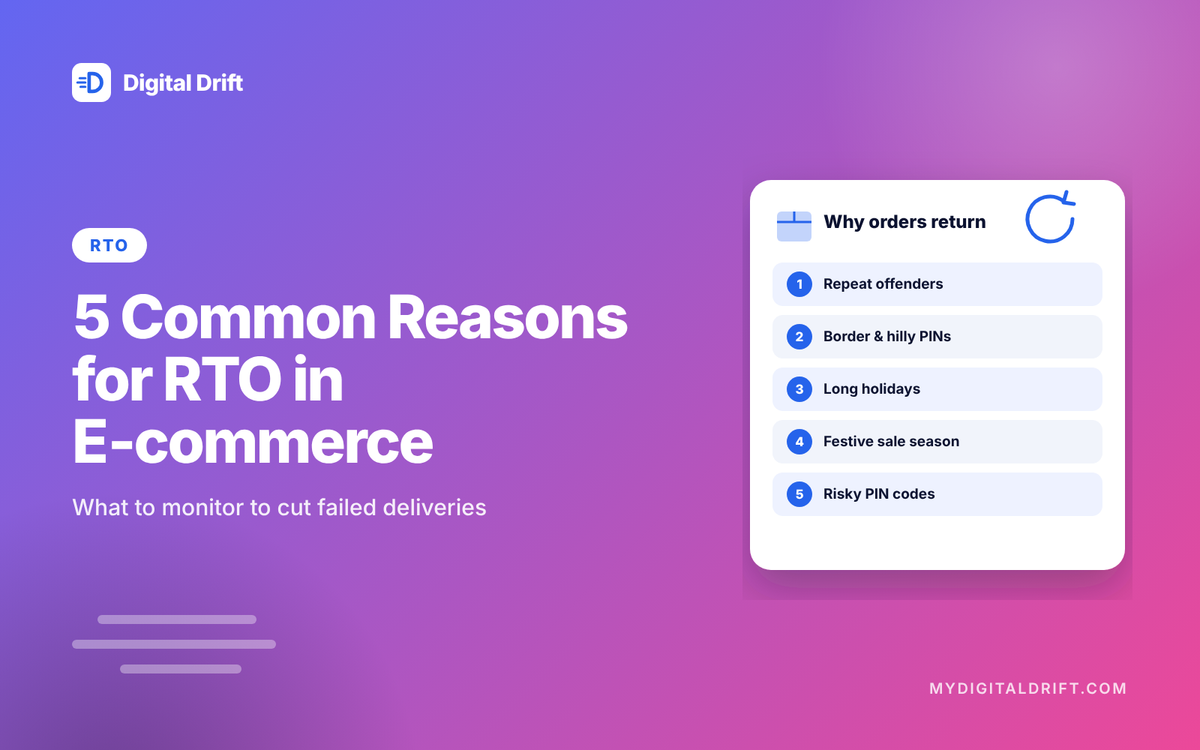
Here are five common reasons for RTO in e-commerce that brands should monitor.
5 common reasons for RTO in e-commerce
1. Repeat Offenders
Some customers repeatedly refuse COD orders or remain unavailable during delivery. Identifying customers with a history of failed deliveries and verifying their orders before dispatch can help reduce repeat losses. Check: list customers with two or more failed deliveries in your order export.
2. Border and Hilly-Area PIN Codes
Deliveries to border regions and hilly areas can face accessibility challenges, limited courier coverage, and longer delivery timelines. Brands should verify serviceability and check courier performance for these locations before shipping. Check: confirm your courier serves the PIN code, and compare its delivery results there with your other couriers.
3. Long Holidays
Extended holidays and festive breaks can disrupt delivery schedules. Customers may travel, become unavailable, or lose interest in delayed orders. Proactive communication and accurate delivery estimates can help manage expectations. Check: compare your RTO before, during and after a long holiday week, and add a delivery-delay note to your order confirmation.
4. Marketplace Festive Seasons
During major marketplace sales and festive events, customers may place multiple orders across different platforms. They might cancel, refuse, or deprioritise some purchases, potentially increasing RTO for certain products and customer segments. Check: compare your RTO on major marketplace sale days with a normal week.
5. Risky PIN Codes
Some PIN codes consistently record higher RTO rates because of delivery challenges, address quality, customer availability, or courier performance. Analysing location-wise data can help brands introduce targeted verification and improve courier allocation. Check: rank your PIN codes by RTO rate using the formula below, and verify COD orders for the worst ones before dispatch.
How to find the reasons for RTO in your store
The five reasons above are common patterns. Your own orders show which one matters most.
- Export the last 90 days of orders with payment type, PIN code, courier and delivery status.
- Mark every order that came back to you as RTO.
- Group the RTO orders by PIN code, courier, payment type and customer.
- Look at two things: the group with the most RTO orders, and the group with the highest rate.
RTO rate for a group = RTO orders in the group ÷ orders shipped to the group × 100
Worked example
- PIN code A: 9 RTO ÷ 40 shipped × 100 = 22.5%
- PIN code B: 15 RTO ÷ 300 shipped × 100 = 5%
- PIN code B has more RTO orders, but PIN code A is the riskier place to ship. Count and rate tell different stories, so look at both.
Example, not real data.
Best use case: Find out what these reasons cost you. Enter your orders and RTO rates in the free RTO Cost Calculator to see your monthly RTO cost and net loss, and what happens if RTO rises by a few points.
Reasons for RTO in e-commerce: frequently asked questions
What are the main reasons for RTO in e-commerce?
The five in this post: repeat offenders, border and hilly-area PIN codes, long holidays, marketplace festive seasons and risky PIN codes. Your own data shows which one matters most.
Is customer refusal the biggest reason for RTO?
It is a common reason, especially with COD, but the biggest reason depends on your store. Tag each RTO order by reason for a month and count them before you decide what to fix.
Does COD cause more RTO than prepaid?
COD usually carries more RTO risk, because the customer has not paid yet. RTO in E-commerce: COD vs Prepaid shows how to compare the two on your own orders.
How do I reduce RTO once I know the reason?
Match the fix to the reason: verify orders from repeat offenders, check courier coverage for difficult PIN codes, set honest delivery dates around holidays, and confirm COD orders in sale seasons.
Conclusion
Reducing RTO starts with understanding why deliveries fail. By analysing customer history, PIN-code performance, seasonal patterns, and serviceability, e-commerce brands can make smarter shipping decisions, minimise avoidable costs, and improve delivery success rates.
Your next step: Export last month's orders and mark the RTO ones. Find the PIN code with the highest RTO rate and check it first.
Read next: RTO in E-commerce: COD vs Prepaid shows how to balance the two payment types. More free calculators are on the Tools page.